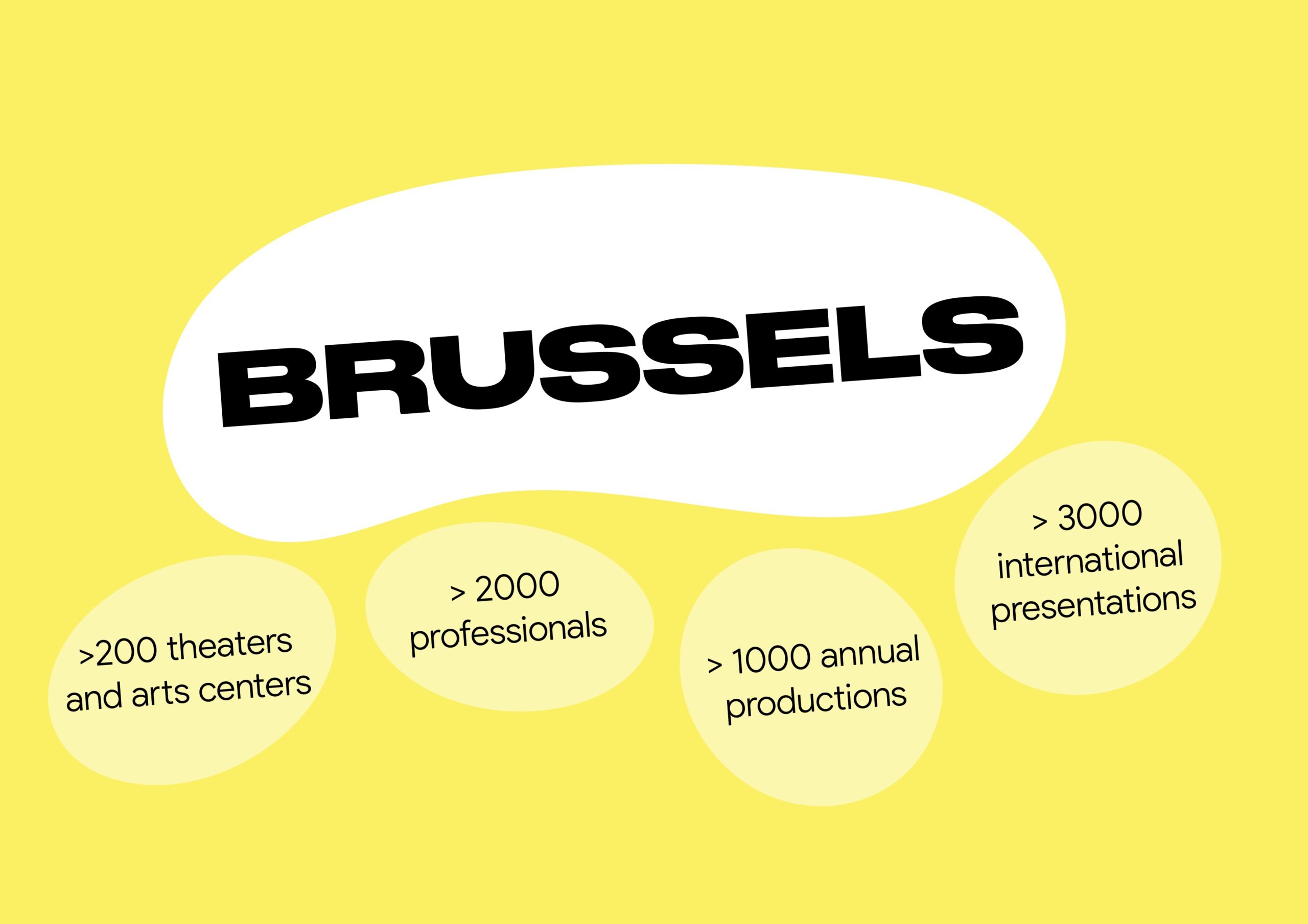
Brussels and the Flanders region (the focus area of the first edition of “Play OFF”), has experienced an unparalleled explosion in the contemporary dance and theater scene since the 1980s. This cultural renaissance was not just a product of talented artists but was also nurtured by a conducive arts ecology, shaped by policies, structures, and international influences. The emergence of what became known as the “Flemish Wave” was pivotal. It was a movement marked by innovative choreography, avant-garde performances, and experimental theater, challenging conventional norms. The fusion of diverse artistic disciplines was a hallmark, leading to a groundbreaking form of expression. At the forefront were artists like Anne Teresa De Keersmaeker, Wim Vandekeybus, Alain Platel and Jan Fabre in dance and Guy Cassiers and Ivo van Hove in theatre, whose boundary-breaking works captivated audiences worldwide. A significant catalyst in this resurgence was the establishment of P.A.R.T.S. (Performing Arts Research and Training Studios) in Brussels in 1995 by Anne Teresa De Keersmaeker. This institution became a breeding ground for aspiring dancers and choreographers, fostering creativity and nurturing a new generation of talent. Its unique pedagogy, emphasizing individuality and collaboration, played a pivotal role in shaping the global contemporary dance landscape. Central to the boom was the structurally sound support system provided by Flemish and Belgian policies. Substantial public funding and policies promoting artistic experimentation provided a conducive environment for artists to thrive. The decentralized cultural policy of Flanders, with a significant degree of autonomy granted to cultural institutions (such as Kaaitheater, Kunstenfestivaldesarts, Vooruit, STUK, Toneelhuis,…), allowed for a diverse and vibrant artistic expression. Moreover, international collaborations and the influx of global artists, notably Meg Stuart, added immense value. Stuart, an American choreographer who settled in Brussels, brought a fresh perspective and pushed the boundaries of traditional dance forms, bridging Brussels with the then equally vibrant scenes in Berlin and New York. Together with the dynamic of P.A.R.T.S. and the need for dancers/choreographers by the rapidly expanding scene, a whole new generation of successful artists arose in the 1990s and early 2000s such as Mette Ingvartsen, Thomas Hauert, Peeping Tom, Sidi Larbi Cherkaoui, Liesbeth Gruwez, Arco Renz, Damien Jalet, Ayelen Parolin. Also the theatre scene didn’t stay behind with very interdisciplinary artists stepping up such as Needcompany, Miet Warlop, Berlin, Ontroerend Goed… The impact of these collective efforts transcended Belgian borders, elevating Brussels and Flanders into global hubs for contemporary dance and theater and also a home for many international artists to come produce their work in Belgium in partnership with Belgian arts centers, such as Milo Rau, Trajal Harrell, Raimund Hoghe, Superamas, Daniel Linehan… Their influence continues to resonate, with Belgian artists consistently pushing artistic boundaries and setting new trends in the ever-evolving world of performing arts. Most recently younger artists with a unique language, often with a lot of references outside of the performing arts such as Jan Martens, Alexander Vantournhout, Radouan Mrziga, Michiel Vandevelde, Benjamin Khan are taking international stages by storm. This cultural renaissance was a testament to the synergy between artistic visionaries, supportive policies such as the creation of “artistic laboratories/workspaces” like Workspace Brussels, KWP,…, educational institutions like P.A.R.T.S., and the influx of diverse international influences. The legacy of this boom remains ingrained in the thriving and innovative contemporary dance and theater scene that defines Belgium, Flanders, and Brussels today.

An ‘OFF’ contemporary performing arts festival in the margin of HKPAX, uniting the local scene and featuring exciting emerging artists from the greater Bay Area and a selection of artists from Brussels/Belgium in a vibrant dialogue platform.